
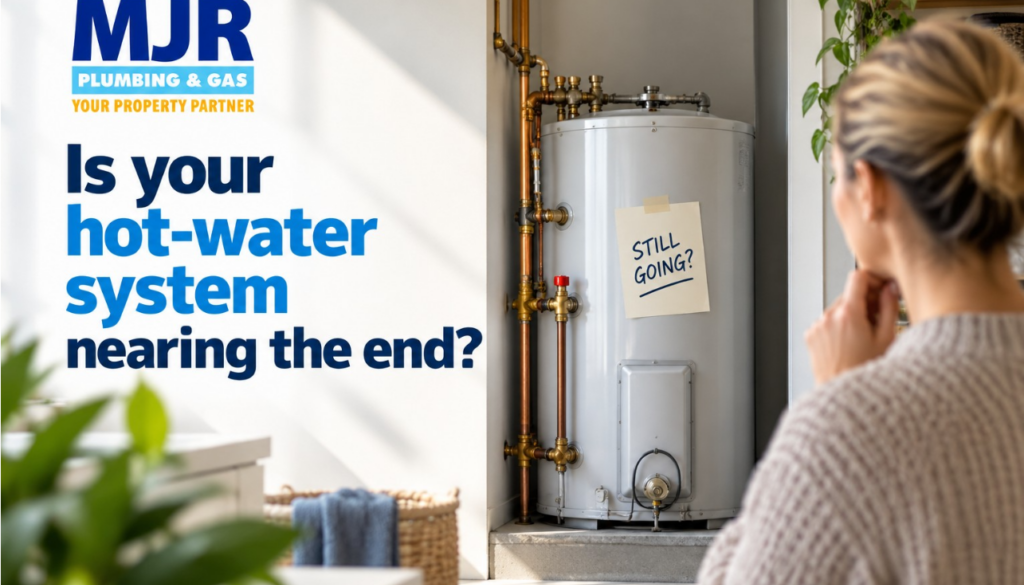
Is Your Hot-Water System Nearing the End?
Most of us don’t think much about our hot water system.
We turn on the shower, hot water comes out, and that’s about as much thought as it gets — until one morning it doesn’t.
But if you own a home in Christchurch with an ageing hot-water cylinder or gas hot-water system, it may be worth thinking about what’s next before your current system fails.
And there’s another reason to plan ahead.
The hot-water system you choose next could have a significant impact on your household’s future energy use and running costs.
How old is your hot-water system?
According to EECA, around 46% of New Zealand homes with an electric hot-water cylinder report that their system is more than 10 years old.
A traditional electric hot-water cylinder has an expected lifespan of around 15 years.
That’s particularly interesting here in Christchurch.
We’re now more than 15 years on from the beginning of the Canterbury earthquake sequence. Many Christchurch homes had repairs, renovations and services replaced during the years that followed.
If your hot-water cylinder dates from that period, it may now be worth checking exactly how old it is.
But age isn’t everything.
We’ve seen cylinders fail much sooner
At MJR Plumbing & Gas, we’ve replaced more than 250 hot-water cylinders since January 2024 — that’s roughly two every week.
Some have been exactly what you’d expect: older cylinders that have simply reached the end of their useful lives.
Others haven’t.
One Christchurch cylinder we recently attended was manufactured in May 2020. It was only around six years old when it failed.
The leak was coming from around the element, and once investigated there was visible evidence of internal rust and corrosion.
It’s a useful reminder that age alone doesn’t determine when a hot-water cylinder will fail.
Installation, water conditions, corrosion, components, usage and the cylinder itself can all play a part.
What warning signs should you look for?
A hot-water cylinder doesn’t always give you plenty of warning before it fails.
However, there are some things homeowners can look out for:
- Rust, corrosion or staining around the cylinder, valves or pipework
- Moisture or water appearing around the cylinder
- Changes in the amount or consistency of your hot water
- Unusual noises
- Water that isn’t getting as hot as it used to
- Regular issues with valves or other components
- A noticeable and unexplained increase in energy use
- A cylinder that is already approaching or beyond its expected lifespan
And sometimes there may be very little warning at all.
That’s one reason we think homeowners with ageing systems should understand their options before they’re dealing with water pouring out of a cupboard at 2am.
Your hot water is a significant part of your home’s energy use
There’s another reason this is worth thinking about.
EECA estimates that water heating accounts for around 30% of the average New Zealand household’s energy use.
That’s a substantial proportion of the energy used in your home.
Yet when an old cylinder fails, the natural response is often:
“Can you just replace it with another one?”
Sometimes that will absolutely be the right answer.
But if you’re going to spend money replacing a system that could be in your home for the next 10–15 years, it’s worth asking a few questions first.
Should you replace like-for-like?
There are now several ways to heat water in a Christchurch home, and the right solution will depend on the property and the people living in it.
One option we’re seeing increasing interest in is heat-pump hot water.
A hot-water heat pump works on a similar principle to the heat pump that heats your home. Instead of directly creating all the heat using an electric element, it takes heat from the surrounding air and transfers it into the water.
That’s what makes the technology so energy efficient.
EECA says hot-water heat pumps can use around 60–75% less electricity than conventional electric hot-water systems.
For households using a lot of hot water, that can make a significant difference.
Does that mean everyone should install a hot-water heat pump?
No.
And that’s an important part of the conversation.
Heat-pump hot water isn’t automatically the best solution for every Christchurch property.
EECA notes that performance depends on factors including climate, household hot-water use, system selection and installation. Heat-pump systems also cost more upfront than traditional water-heating systems, and their efficiency can reduce during colder weather.
Before recommending one, we’d want to understand things like:
How many people live in the house?
A larger family generally uses considerably more hot water than a one or two-person household. The more hot water you use, the greater the potential energy savings from a more efficient system.
What system do you currently have?
Moving from an older electric cylinder isn’t the same calculation as replacing gas continuous-flow hot water.
How much hot water do you actually use?
Four people who take short showers could have a very different consumption pattern from a family with teenagers taking long showers, despite having the same household size.
Where could the new system go?
Outdoor heat-pump systems need an appropriate location with adequate airflow and consideration given to noise, pipework and the distance from hot-water outlets.
How long do you intend to stay in the property?
A heat-pump system generally costs more to purchase and install. The potential savings therefore need to be considered over time.
Could upgrading save you money?
Potentially — particularly if you have a larger household that uses a lot of hot water.
EECA currently estimates that a hot-water heat pump could save an average household around $284 per year, while stressing that actual savings depend on the household and system.
But there’s a better way to think about the economics if your existing system already needs replacing.
Imagine your existing cylinder fails and you have two choices:
Option A: Replace it with another conventional system.
Option B: Spend more upfront to install a heat-pump hot-water system.
You don’t necessarily need to recover the entire cost of Option B through energy savings.
You need to consider the additional cost of upgrading compared with the replacement you would have needed anyway.
That’s why the point at which your existing hot-water system reaches the end of its life can be a particularly good time to investigate your options.
Hot-water heat pumps are still relatively uncommon in NZ
Despite the potential efficiency gains, the technology is still relatively new to many Kiwi homeowners.
EECA estimates there are only around 12,000 heat-pump water heaters installed in New Zealand homes, out of approximately two million residential hot-water systems.
That’s less than 1%.
By comparison, around 80,000 traditional electric storage water heaters are sold in New Zealand each year.
As older systems reach the end of their lives, we expect more homeowners will start asking a different question.
Not simply:
“What should I replace my old cylinder with?”
But:
“What’s the best way to heat water in my home for the next 10–15 years?”
Find out whether heat-pump hot water could suit your home
We’ve created the MJR Heat-Pump Hot Water Suitability Assessment to help Christchurch homeowners start answering that question.
It takes just a few minutes and looks at your current hot-water system, household and circumstances to help determine whether heat-pump hot water is something worth investigating further.
Take the FREE MJR Heat-Pump Hot Water Suitability Assessment at https://anne-3yeqiigt.scoreapp.com
There’s no obligation to replace anything.
The aim is simply to help you understand your options before you’re forced to make a rushed decision because your existing system has failed.
Before you replace like-for-like, understand your options.
If your hot-water system is approaching the end of its life, now is the time to start planning — not when you’ve suddenly got no hot water.
MJR Plumbing & Gas can assess your existing system, discuss the different options available and help you understand what is likely to suit your property and household.
Because the best time to decide what comes next is before the old system makes the decision for you.
MJR Plumbing & Gas
Your Property Partner